Related Articles
- When Ancient Trade Routes Resurface: Unexpected Lessons for Modern Commerce and Global Economic Resilience
- When Artifacts Become Currencies: The Intriguing Trade Between Antiquities and Emerging Markets
- Beyond Borders: Unconventional Partnerships Transforming Trade Strategies in the Age of Globalization
- The Rise of Shadow Economies: How Informal Trade Networks are Disrupting Global Market Structures
- Cryptocurrency and Society: Understanding the Hidden Costs of Digital Assets on Community Well-Being
- The Surprising Role of Cultural Narratives in Shaping Investment Choices and Financial Preferences
11 Secret Innovations from the Underground: Unmasking Eccentric Business Concepts That Challenge Conventional Wisdom
11 Secret Innovations from the Underground: Unmasking Eccentric Business Concepts That Challenge Conventional Wisdom
11 Secret Innovations from the Underground: Unmasking Eccentric Business Concepts That Challenge Conventional Wisdom
1. Biohacking: DIY Biology for the Brave
In the realm of innovation, biohacking emerges as a defiant challenge to traditional biomedical practices. Individuals and communities are exploring ways to enhance their physical and mental capabilities using do-it-yourself biological techniques. This movement often involves a deep dive into genetics, nutrition, and even cognitive enhancements.
By experimenting with nootropics, CRISPR technologies, and various DIY lab setups, biohackers are pushing the boundaries of what is considered acceptable within the scientific community. This trend raises ethical questions about self-experimentation and its implications for health and safety.
Notably, the biohacking scene has given rise to numerous influential companies and initiatives, such as the non-profit organization DIYbio, which encourages community-driven biology projects. As more enthusiasts join this movement, it stands to challenge the status quo in health and wellness, offering alternative routes to personal optimization (Harris, 2020).
2. Urban Farming: Reimagining Food Production
Urban farming, often seen as a quirky hobby for city dwellers, has steadily transformed into a viable business model that addresses food scarcity in metropolitan areas. These farms utilize vacant lots, rooftops, and vertical spaces, allowing them to produce fresh food close to the consumer, thus reducing carbon footprints.
The concept emphasizes sustainability and community engagement, fostering local economies while minimizing transportation costs. Urban farms are particularly adept at growing organic produce, employing techniques like aquaponics and hydroponics, which makes them resilient against environmental challenges.
Businesses like Bowery Farming and AeroFarms exemplify how urban farming can scale and yield profits while also enhancing food security and sustainability in urban landscapes (Benedict, 2021). This underground movement blends agricultural innovation with urban landscapes, challenging the traditional agricultural paradigms.
3. Cryptocurrencies: The New Age of Currency
Cryptocurrencies have emerged from the fringes to redefine our understanding of money and economic systems. Initially conceived as an alternative to traditional banking, these decentralized digital currencies challenge government-issued currencies by offering peer-to-peer transactions without intermediaries.
What sets cryptocurrencies apart is their underlying blockchain technology, which ensures transparency and security while operating outside conventional financial institutions. Enthusiasts argue that this innovation democratizes finance, giving individuals more control over their money and potentially reducing dependence on banks.
As cryptocurrencies continue to gain traction, companies worldwide have implemented digital currencies into their payment systems. Despite challenges like regulatory scrutiny and volatility, the cryptocurrency phenomenon remains a powerful example of how underground innovations can disrupt established norms (Narayanan et al., 2016).
4. The Gig Economy: Workers Without Borders
The gig economy has disrupted traditional employment by enabling workers to offer their skills on a freelance basis, often referred to as the "side hustle" culture. Platforms like Uber, TaskRabbit, and Upwork are at the forefront of this movement, allowing individuals to take on multiple jobs simultaneously, transcending traditional employment boundaries.
This model supports a flexible lifestyle that many modern workers crave, allowing them to balance multiple income streams. However, it also presents challenges surrounding job security, benefits, and worker exploitation, prompting conversations about the need for new labor laws to protect gig workers.
As this trend continues to grow, we must reconsider our definitions of work and stability in a rapidly changing economy. The gig economy exemplifies how traditional norms can be reshaped through innovative and often eccentric business ideas (Friedman, 2014).
5. Zero-Waste Businesses: Rethinking Consumption
As environmental concerns become increasingly urgent, zero-waste businesses have emerged as a revolutionary model that seeks to eliminate landfill waste entirely. These businesses challenge conventional consumption patterns by promoting reuse, repair, and responsible sourcing of materials.
From package-free grocery stores to zero-waste cafes, entrepreneurs in this field advocate for a circular economy. This approach not only minimizes waste but also encourages sustainable practices, fostering a community-focused culture that values resourcefulness and environmental stewardship.
Companies like Package Free Shop and The Zero Waste Collective demonstrate how these principles can be integrated into successful business models. By encouraging consumers to rethink their purchasing habits, zero-waste businesses promote a paradigm shift toward sustainability in everyday life (Smith, 2020).
6. Subscription Services: Convenience at a Cost
While subscription services are commonplace today, their roots delve into eccentric business territory where convenience meets consumer demand. From meal kits and streaming services to niche product deliveries, the subscription model capitalizes on the desire for curated experiences in a fast-paced world.
This business concept allows companies to establish recurring revenue while fostering customer loyalty. By providing personalized products or experiences, companies can tap directly into their consumers’ preferences, reshaping traditional retail approaches entirely.
Services like Dollar Shave Club and Blue Apron have illustrated the potency of this model, transforming their respective industries by placing convenience and customer engagement at the forefront of their business strategies. Such innovations challenge the notion of ownership, shifting toward access (Smith, 2019).
7. Co-Working Spaces: The Evolution of Office Life
Co-working spaces represent a stark departure from conventional office environments, offering flexible, collaborative spaces for freelancers, startups, and established companies alike. This innovative concept encourages networking, creativity, and productivity by blending work with social interaction.
As remote work gains popularity, co-working spaces have become essential hubs for professionals seeking community and resources without the rigidity of traditional workplaces. These spaces often include amenities such as shared equipment, meeting rooms, and networking events—creating an ecosystem of innovation.
Companies like WeWork and Impact Hub not only provide physical space but also foster a sense of belonging in an increasingly digital world. As more professionals seek alternatives to isolated home offices, co-working spaces challenge conventional ideas about where and how work should occur (Kim, 2018).
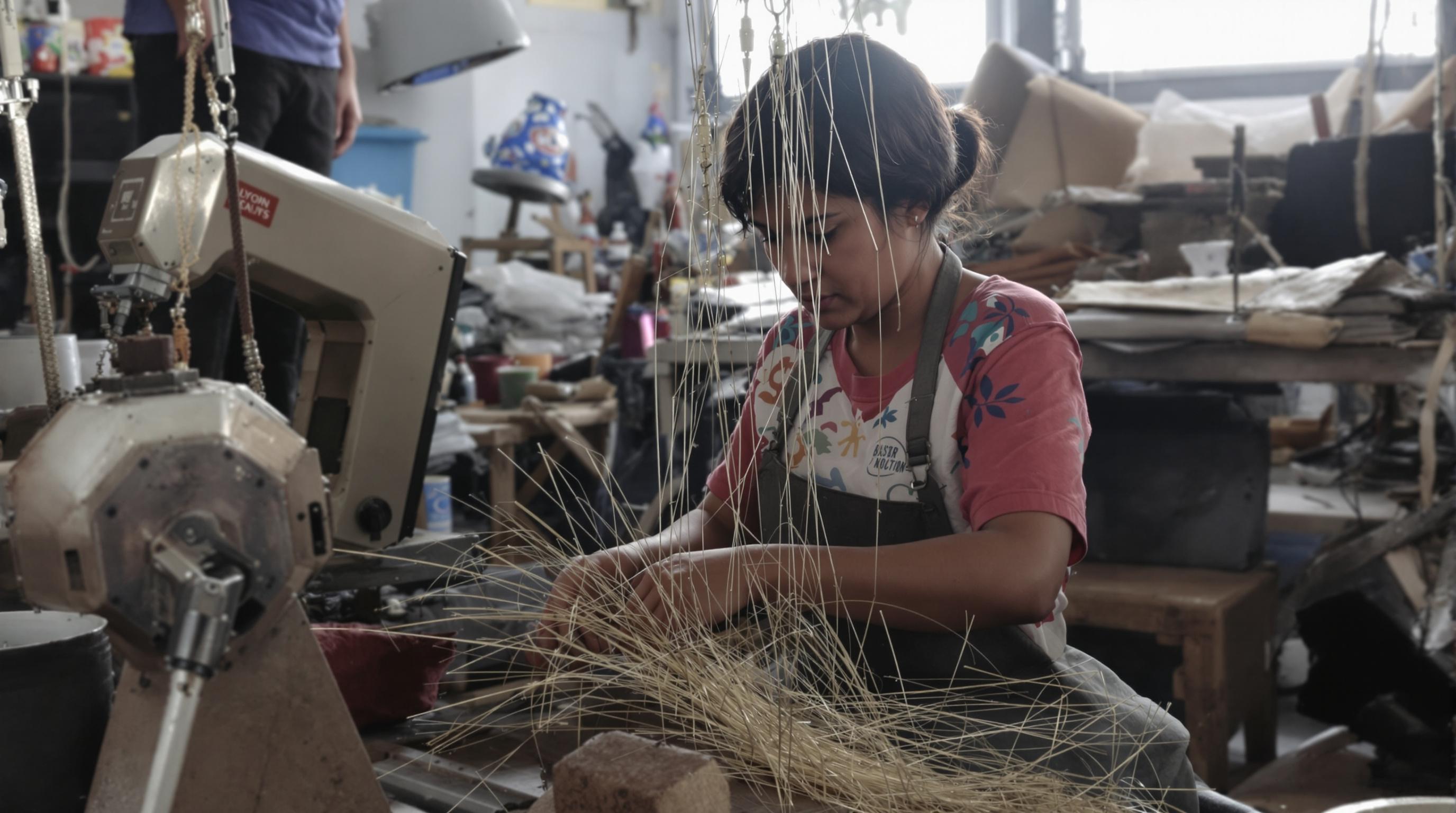
8. Artisan Collaboratives: The Return of Craftsmanship
Artisan collaboratives are breathing new life into traditional craftsmanship, celebrating skill and quality over mass production. Collectives of artisans, makers, and designers band together to share resources, space, and support, resulting in high-quality, handcrafted products that stand in stark contrast to cheap, disposable goods.
These collaborative spaces not only provide small businesses with the means to thrive but also encourage sustainable practices by prioritizing local sourcing and eco-friendly materials. This resurgence of craftsmanship defies the fast-paced consumer culture, allowing for unique, meaningful connections between makers and consumers.
Examples of this movement include Maker Spaces and B Corporations, which promote ethical and sustainable production. Through artisan collaboratives, the narrative around consumption is shifting away from quantity towards quality and intentionality (Williams, 2020).
9. Crowdfunding: Revolutionizing Funding for Innovators
Crowdfunding has emerged as a pioneering method for entrepreneurs and creators to secure funding outside traditional investment channels. By reaching out directly to the public, this model allows innovators to raise capital while simultaneously generating grassroots support for their projects.
Platforms like Kickstarter and Indiegogo have democratized access to funding, enabling even the smallest ideas to gain traction. This approach not only empowers creators but also fosters community engagement, as backers feel invested in the success of the projects they support.
The implications of crowdfunding extend beyond monetary support; they also create new avenues for market validation, allowing entrepreneurs to test concepts without heavy investment. This bottom-up innovation model continues to challenge established norms in venture capitalism (Gleaser, 2017).
10. The Digital Nomad Lifestyle: Work from Anywhere
The digital nomad lifestyle challenges the traditional construct of the workplace by allowing individuals to work remotely while traveling. Fueled by advances in technology, remote work has become increasingly accessible, enabling a growing number of people to break free from the confines of a conventional office.
This lifestyle fosters a sense of freedom and adventure, appealing to those who crave experiences over stability. Digital nomads often share resources, tips, and community support through platforms like Nomad List and Facebook groups, cultivating a robust subculture.
The rise of the digital nomad is redefining how we think about employment and location, prompting businesses to adapt their practices to accommodate remote work. As this trend continues, companies may find new ways to attract talent and shift their operational strategies to keep pace with this evolving workforce (Gonzalez, 2019).
11. Alternative Education Models: Learning Outside the Box
Alternative education models represent a departure from traditional schooling systems, offering innovative methods to engage learners in new and dynamic ways. These models often focus on experiential learning, interdisciplinary studies, and mentorship rather than a rigid curriculum.
Examples include unschooling, Montessori, and democratic schools, all of which prioritize student agency and holistic development. By rejecting cookie-cutter approaches, these educational innovations challenge the status quo in how knowledge is acquired and foster a love for learning.
The increasing popularity of alternative education opens conversations about the purpose of schooling in a rapidly changing world. As parents and educators seek more tailored approaches for their children, these unconventional models signal a shift in educational philosophy that celebrates creativity and individuality (Miller, 2021).
Harris, P. (2020). *Biohacking: The DIY Biology Movement and Its Impact on Healthcare*. Journal of Health Innovation.
Benedict, L. (2021). *Urban Agriculture: The Future of Food Production in Cities*. Agriculture Today.
Narayanan, A., Bonneau, J., Felten, E., Miller, A., & Stack, J. (2016). *Bitcoin and Cryptocurrency Technologies*. Princeton University Press.
Friedman, G. (2014). *The Rise of the Gig Economy: How Smart Companies Are Embracing the Future of Work*. Business Insights.
Smith, R. (2019). *The Subscription Economy: How Services Are Transforming Consumer Behavior*. Marketing Review.
Smith, R. (2020). *Beyond Waste: Understanding Zero Waste Principles in Business*. Sustainability Journal.
Kim, S. (2018). *The Co-Working Space Phenomenon: The Future of Workplaces*. Economic Trends Review.
Williams, J. (2020). *Crafting Community: The Artisan Collaborative Movement in the 21st Century*. Journal of Cultural Studies.
Gleaser, E. (2017). *Crowdfunding: The New Frontier of Raising Capital*. Entrepreneurship Journal.
Gonzalez, A. (2019). *The Digital Nomad: Navigating Work and Travel in a Flexible World*. Travel & Work Review.
Miller, L. (2021). *Alternative Education Models: A Shift in Learning Philosophy*. Journal of Educational Innovation.
Read More